Arabs and the Art of Storytelling a Strange Familiarity Coppyright
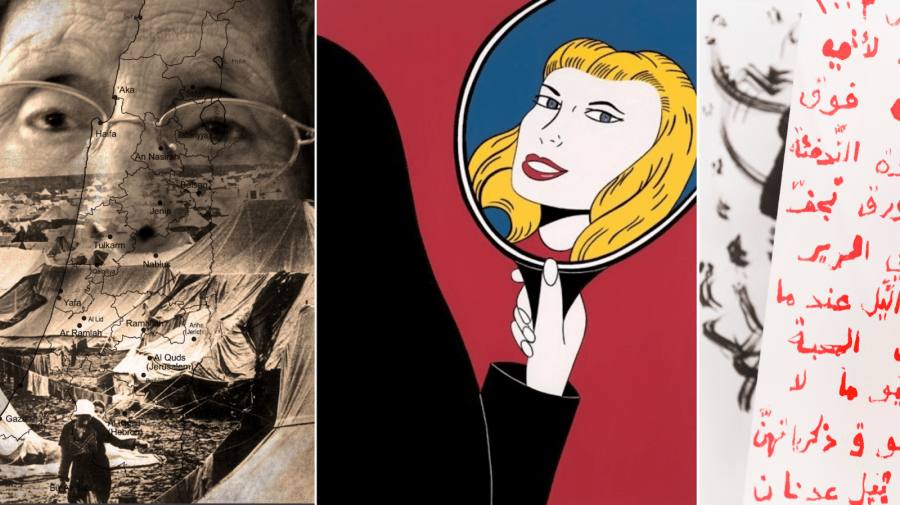
Whether they're based in Sudan or Michigan, Arab American artists take shaped the earth of fine art in meaningful ways, bringing perspectives and lived experiences to their work that other artists simply can't. Non only does this underscore their importance in the art world, but it reaffirms the need for an array of different makers to add their points of view to the larger canon of art history.
In celebration of National Arab American Heritage Month (NAAHM), nosotros're spotlighting 10 of the most influential gimmicky Arab American artists. Although their mediums vary greatly, these creators — artists, filmmakers, writers and activists — keep to use their artistry to bring awareness to our ingrained cultural perceptions of organized religion, gender, race and more than.
Abdelali Dahrouch
Abdelali Dahrouch was born in Tangier, Morocco, only grew upward in Morocco and France earlier emigrating to the United States in 1984. He graduated from the Pratt Constitute in New York City with a Masters of Fine Arts (MFA). Later, Dahrouch was a fellow in residence at a handful of places, including the Medamedia Centre for the Arts in Plasy, Czech republic, and the Whitney Museum of American Fine art Independent Report Programme in New York.
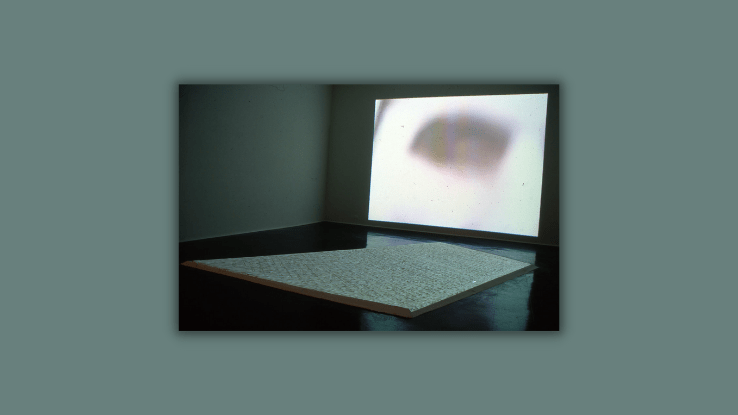
Every bit an artist, he covers a diverseness of mediums and could be described as a writer, activist, and video installation artist. Past using his artwork to interface betwixt ecology, Buddhism, and Postcoloniality — and how it has affected transnational migration concerning North Africa and the Eye East — Dahrouch is, undoubtedly, an artist to know.
In one interview, Athir Shayota expressed that the state of contemporary international art exists in at least two forms. He says that 1 is a market-driven product that reflects on benign notions and doesn't claiming the observer — and the other is a politically conscious, relevant and interventionist one. Shayota is skeptical of the market place-side of things — after all, art (and artists) shouldn't be a trend.
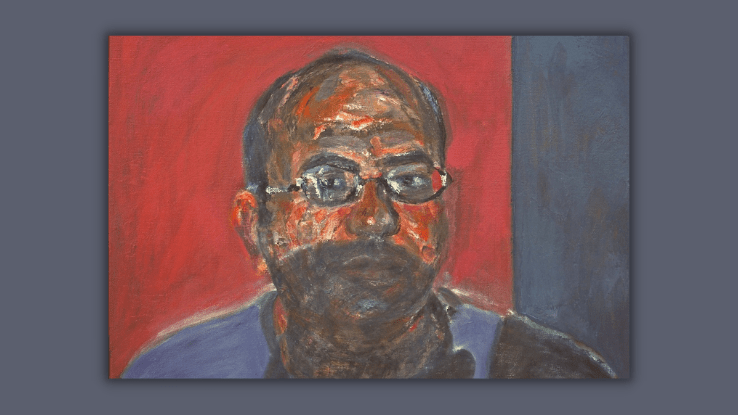
Currently a painter based in New York, Shayota attended the College of Creative Studies in Detroit before going onto Washington University in St. Louis, Missouri, where he received an MFA. While his didactics every bit an artist was Western-centric, Shayota made a concerted try to learn about art from other non-white, non-Eurocentric cultures, which has undoubtedly informed his work.
Etel Adnan
Etel Adnan was a queer Lebanese American visual artist, poet, and essayist born in Beirut, Lebanese republic in 1925. She grew upward speaking Turkish, Greek and Arabic in Lebanon, and studied English language during her youth. In 2003, the Multi-Ethnic Literature of the United States (MELUS) named Adnan the most-celebrated and accomplished Arab American author writing at the time.
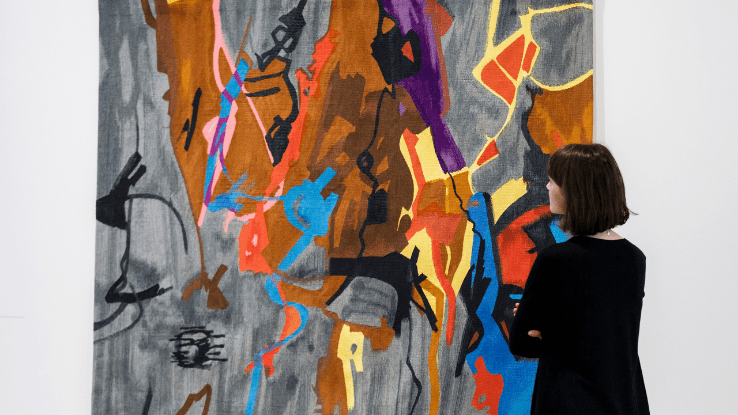
But Adnan is too an accomplished visual creative person, who's known for applying oil pigment to sheet with a palette knife. During her lifetime, she received a Lifetime Accomplishment Honor from the Radius of Arab American Writers (RAWI). Although she passed away in 2021 at the historic period of 96, Adnan was survived by her longtime partner, beau Lebanese American creative person Simone Fattal.
Helen Zughaib
Born in Beirut, Lebanon, Helen Zughaib has lived in the Heart East and Europe, but eventually came to the U.S. to study art at Syracuse University, where she earned a BFA. A painter and multimedia artist, Zughaib works primarily in gouache, ink on board, and canvas — though her mixed-media installations also involve wood, cloth and fifty-fifty set-made objects, similar shoes.
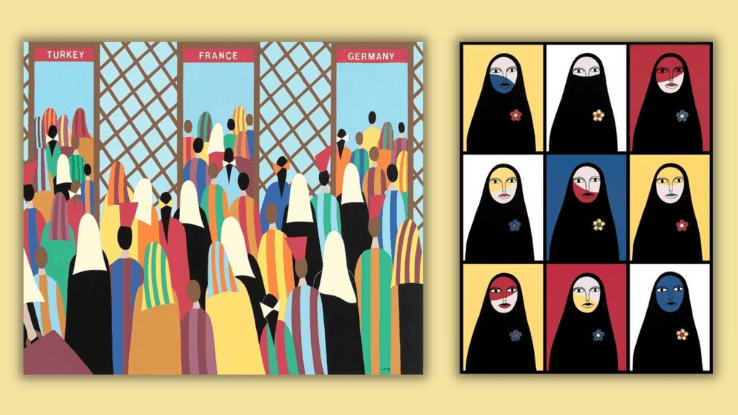
Zughaib'due south piece of work has been exhibited in galleries in Lebanon every bit well equally throughout Europe and the U.S. Many of her works are likewise featured in both private and public collections, including those of the White House, the Library of Congress, and the American Embassy in Baghdad, Iraq.
Huda Fahmy
Growing up in Dearborn, Michigan with a Syrian mother and an Egyptian father, Huda Fahmy spoke Standard arabic at domicile and went to a private Islamic schoolhouse. When she started public school, she didn't know whatsoever English language, but learned to do and then by reading comics similar Garfield and Calvin and Hobbes. These works also taught her how to tell a story — and certainly inspired something in her.
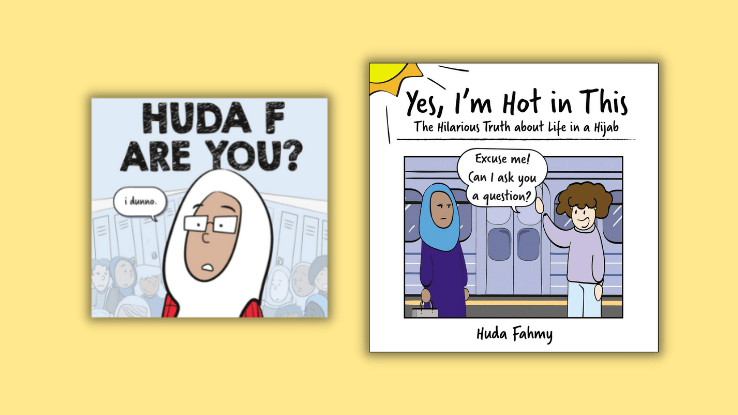
A former middle and high school instructor, Fahmy never took formal art lessons before becoming a published artist and writer. While on get out from piece of work with her baby son, she felt motivated to create comics in response to the U.s.a.' bigoted "Muslim Ban" in 2017. Since then, Fahmy has used sense of humor in her comics to address stereotypes and other hard situations that Muslim people face while living in the U.S.
John Halaka
An artist and film producer, John Halaka's piece of work raises questions virtually personal, political, and cultural concerns, particularly about cycles of repression and displacement. His recent documentary investigates the construction of identity from familial, political, and personal perspectives.
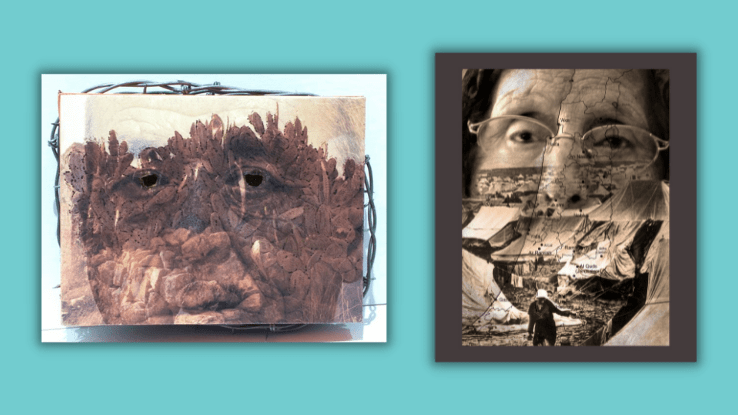
But Halaka is also known for memorializing the diaspora of the Palestinian people, which brought to his mind the Trail of Tears — the U.S. government-organized genocide against several Indigenous tribes who lived on land east of the Mississippi River. One of his series, Landscapes of Desire, was inspired past the ruins of homes and villages in Palestine, which have been actively destroyed since 1948.
Mariam Ghani
Born in New York, Mariam Ghani is an Afghan American instructor, filmmaker, photographer and activist. But that's not all that's on her resume; Ghani too works equally an archivist, writer and lecturer.
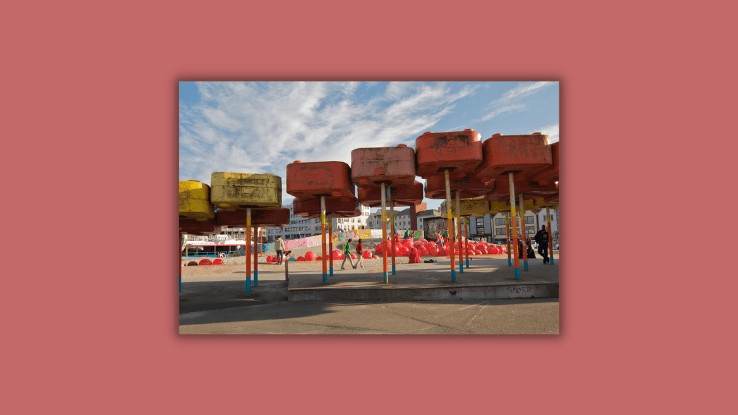
While growing upwards, Ghani couldn't travel to Afghanistan. Finally, she was able to visit in 2002. Since 2004, she's worked on a multimedia projection called Index of the Disappeared, a record of the detention of immigrants past the United States after 9/11 and an exploration of the public's treatment of immigrants.
Mohammed Omar Khalil
Built-in in Burni, Sudan, Mohammed Omar Khalil is a printmaker and painter. He was educated in Khartoum and later on studied fresco painting and printmaking at the Academy of Fine Arts in Florence, Italian republic, before becoming a resident creative person at Darat Al Funun in Amman, Hashemite kingdom of jordan in 1993.
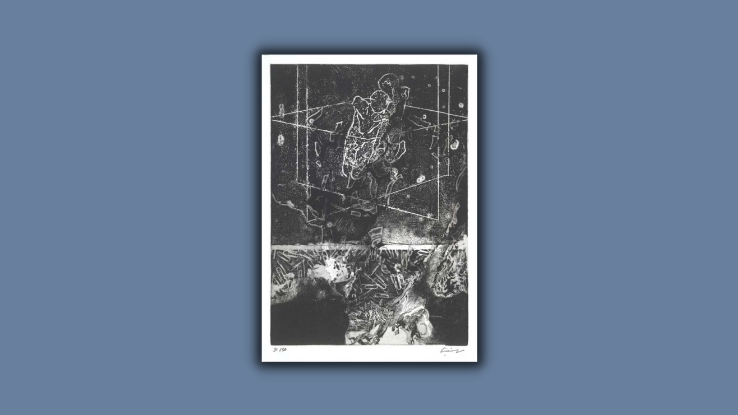
In the 1970s, Khalil came to New York'due south art scene. Since and then, he's been considered one of the nigh significant artists of his generation. Although a overflowing in Khartoum destroyed much of his early work, a few pieces from his pre-1988 period survived.
Rheim Alkadhi
Rheim Alkadhi was born in New York to an American mother and Iraqi father, going back and forth betwixt Baghdad and New England as a child until the Iran-Iraq War. At that point, her family moved to the U.S. full time. Withal, Alkadhi has continued to travel for her work, which uses images, text and objects.
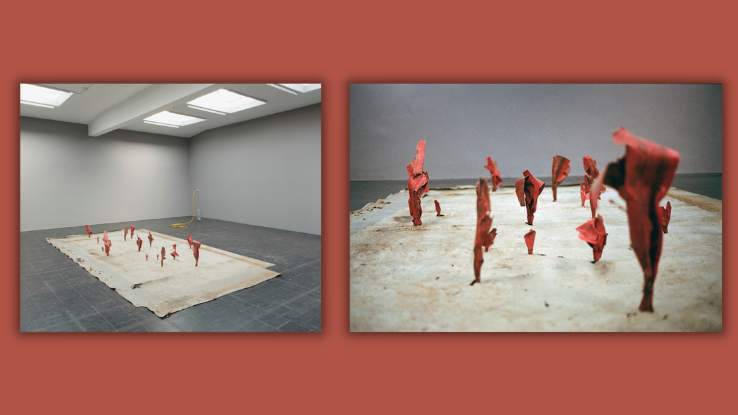
I case of her work, Night Taxi , includes a video accompanied by a road, meter, and a fare that counts down the milliseconds leading up to crossing a geographical border. Other well-known works include Picture Urban center Body, which depicts the visual poetry of everyday life, and the to a higher place installations from the Majnoon Field exhibition, which refers to an oil field in Iraq.
Yasmine Nasser Diaz
Born to Yemeni parents in Chicago, Yasmine Diaz creates mixed-media collages, fiber etchings and immersive installations. Although it varies greatly in terms of aesthetics, her work carries a thematic thread, often focusing on the ideas of soft power, growing up every bit a Yemeni American and third-culture identity.
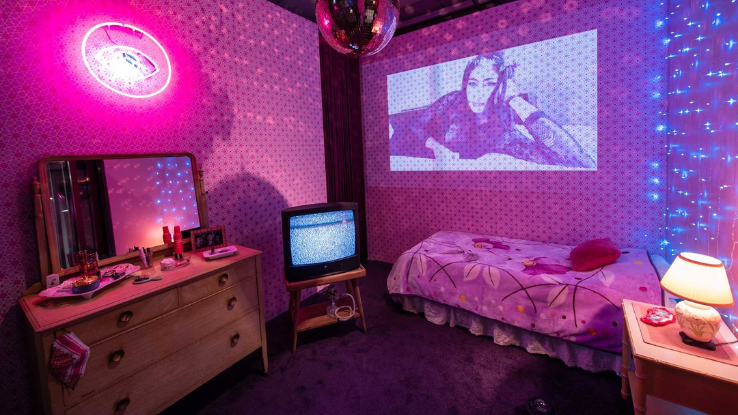
In 2021, she exhibited a bedroom installation called For Your Eyes Only (above), which explored the systemic oppression of women and third culture identity in the Global South. "Freedom and rights movements practise not exist in a vacuum and are oftentimes informed past 1 another," said curator Lila Nazemian when writing about Diaz'due south work and how it relates to diasporic communities. "Diaz's installation [For Your Eyes Only] presents a layered constellation of interrelated realities across borders, identities and eras that have the potential to align forth intersectional and transnational movements of solidarity."
deeseexierfirs1964.blogspot.com
Source: https://www.ask.com/culture/contemporary-arab-american-artists?utm_content=params%3Ao%3D740004%26ad%3DdirN%26qo%3DserpIndex
0 Response to "Arabs and the Art of Storytelling a Strange Familiarity Coppyright"
Post a Comment